Friday, 30 March 2018

Book Notes: The Digital Doctor: Hope, Hype, and Harm and the Dawn of Medicine’s Computer Age by Robert Wachter

The US healthcare system has been under increasing pressure on multiple fronts. Healthcare cost has been rising faster than the rate of GDP growth in recent years and an estimated 100,000 patients die from preventable medical error each year - equivalent to 1 jumbo jet of patients every week. These errors in 2010 cost an estimated 21 billion dollars.

Digitization has been touted as a solution for these ills – instant and simultaneous access to patient data, automated alerts for adverse drug interaction, streamlined workflow, are among the key benefits of this new technology. But Wachter argues that we are still in the early stages of medical information digitization and its success is mixed. He has written this book as a "state of digital healthcare IT" report, documenting its triumphs and pitfalls, focusing on the Electronic Medical Record (EMR) and Image Management systems in the hospital setting in the US, with a glimpse into the bright future such technologies may bring.

Radiology

Prior to digitization, patient exams/studies, often using X-rays, would be developed or printed on a film and stored centrally in a cabinet full of patient files. Doctors and radiologists would pull the films from the files and review them together during the diagnostic process. Doctors shared the clinical context while radiologists provided the reading of the film.

As the imaging technologies matured, digitized images started showing their advantages, and in some cases, necessity, in providing quality care.

In the early 80s, a CT scan study may contain up to a few dozen images. By the late 90’s, however, a high speed CT scanner can produce hundreds of images in one study. Printing each study on film at $4 per film would cost thousands for one exam and became cost prohibitive, time consuming, and made their transportation to various departments too onerous. In one story, a doctor printed only the even-numbered slides from a study in order to save money, when the abnormality in the images only presented on the odd-numbered slides, nearly causing a misdiagnosis. Archiving physical films also became too expensive compared to the digital counterpart. Digital images are also much more accessible. While films can only be viewed at one place at a time, a digital file can be viewed by several doctors in different locations at the same time. Such developments made digitization of images a very attractive option.

The digitization effort became the Picture and Archiving System (PACS). It is the software system that manages medical images. Doctors use it to receive, transmit, store, archive, and read the medical images and produce reports.

As PACS evolved, more automation were naturally added as software capabilities allowed and hardware processing power became abundant. In the film days, doctors might look at a study and decide to read an earlier study of the same patient for context. These earlier studies are called priors, and the retrieval process used to mean walking over to the patient file again, searching for the study with the priors with the relevant information - perhaps the most recent earlier study of a particular body part – a time consuming process.

On a PACS, however, doctors can choose the prior searching criteria, set it once, and the system automatically retrieve the priors in the background every time a study is being viewed. This way the priors are readily available when the doctors need them – significantly reducing the time for searching through images. Digital images also allowed for more flexible annotations. Multiple layers of “virtual views” can be superimposed on images and saved separately for ease of presentation and and discussion.

The automation and instant access much increased radiologists’ productivity. By one estimate, the case loads to radiologists increased by 70%.

The clear cost saving and productivity advantages of PACS together with radiologists’ relative ease with adopting newer technologies (radiology imaging equipment required a level of technical savvy even in its early days) meant the digitization of radiology occurred rapidly once the tool was available, and it occurred without requiring government intervention. In 2000, only 8% of hospitals had PACS, but in 2008, over three quarters had them.

The adoption of the PACS, while beneficial, had some unintended consequences. Unbounded by the single copy film days, doctors now access images and look at them at different locations. Pressured by the pay-per-study model, radiologists spend most of the time in front of the screen just reading studies and not interacting with clinicians. Clinicians and radiologists cooperate less to come up with a diagnosis and radiologists do not often see patients. The Baltimore VA hospital estimated that after their implementation of PACS, in person consultation rates for general radiology studies dropped an estimated 82%. This separation can make diagnosis less accurate and gives less learning opportunities for different parts of the medical world.

Further, due to the increase in caseload, radiologists are reporting more incidents of burnout. Many PACS now provide telemedicine capabilities and allowed radiologists to read images from remote regions, creating competition for local and more costly radiologists. These changes are also occurring at a time when U.S. healthcare system is shifting from a pay per volume model to value based model, with a focus to rein in unnecessary medical images.

In response to the current environment and to make themselves more valuable, some radiologists have started to actively participate in in-person consultation and be more involved in providing value in diagnostic processes to the clinician and patients.

Looking to the future, as AI advances, some software programs are showing early promise in reading images in specialized areas, which adds anxiety to radiologists’ sense of job security. Vendors, however, are quick to add that AI is meant to complement and support radiologists, not to replace them. As Wachter argues, the complex art of combining the image reading with the social and clinical context is still solely the domain of human radiologists.

Electronic Medical Record and Health IT systems

The earliest medical note dated to 5th century BCE. Until a few centuries ago, it was mainly a narrative that read like a story describing the state of the patient, written in a doctor's journal. Lacking other diagnostic tools, description of ills are often told by the patient. It looked like this:

The first symptoms always affect the extremities of the limbs and the lower limbs particularly. When the whole body becomes affected, the order of progression is more or less constant: (1) toe and foot muscles, then the hamstrings and glutei, and finally the anterior and adductor muscles of the thigh; (2) finger and hand, arm, and then shoulder muscles…

The doctor in those days, without scientific measurement or much in the way of effective treatment, offered care and their attention for one who is at their most vulnerable.

Gradually, the realm of science permeated medicine. It became apparent that the same disease has common symptoms from one individual to another, and those symptoms can be summarized and well measured by various tools - the knee hammer, stethoscope, and now, x-rays and MRIs. Gradually, observations of a patient's symptoms overtook the patient narrative, and measurements crept into the doctor's notes.

As medical knowledge grew, specializations arose, and a patient is often cared by many doctors and their private notes became the public patient chart. To identify a patient more efficiently, patient ID came on the scene, where each patient is uniquely identified by an ID tied to a chart, used by whoever is caring for the patient. This innovation vastly improved the efficiency and effectiveness of patient care. In the age of paper charts, hospitals like the Mayo clinic built elaborate pneumatic tubes to expedite the movement of patient charts.

Gradually, other institutions joined the healthcare ecosystem and the chart took on ever more duties. Besides patient care, charts are used for clinical research, billing to payers like insurance companies, to auditors who maintain patient safety, and to the lawyers and legal teams who fight for and against medical malpractice suits. The chart became a political battleground serving the demands of multitude of stakeholders. It reflects an emphasis on the illness and its measurements and less on the patient. A chart today looks like the following – far from the narrative it once was:

vs stbl, ō comp.; no Δ resp. 02 sat ok; xam un-Δ’d – see note 11/12; fam. visit.; no nursing issues; labs = no incr. aldolase, CK’s; note: this enctr. took 65’ & inv. a hi deg. of complex. in dec. making.

Adding to this complex picture is digitization. Efforts for digitization of medical note started in the 70's, but after decades only a small percentage have a digital medical record system. Unlike the digitization of radiology which had a clear benefit and occurred 10 years earlier, a large marketable benefit of electronic medical record (EMR/EHR) was interoperability – that a patient treated at hospital A will have his/her record available at another hospital across the country. It was seen as a public good like highway infrastructure but wouldn’t benefit the hospitals who themselves spend millions implement (or roughly around $40,000 per physician, not to mention the high risk of such an enormous system – 30% of the systems fail. This was the selling point of Epic, the dominant vendor of EMR, which is very expensive but has a tried and true strategy with a great success rate). Lack of incentive translated to low implementation rates for EMR.

A pivotal moment came during Obama's presidency. Realizing the need to curb cost, the administration wanted to move from volume based to value based care. But to measure value requires tracking medical procedures and outcomes accurately and can only be feasibly done through digital means of medical charts, creating the need for digitization. Secondly, engulfed in the financial crisis of 2008 the government wanted to keep up spending in the economy through a large stimulus package. These two imperative convinced the Obama administration to channel 30 billion dollars to mandate and implement the use of electronic medical records at hospitals across the country. This dramatically boosted EMR adoption in hospitals and doctors’ offices. In 2008, the adoption rate was in the low teens. By 2014 it had gone up to about 70 percent.

Digital medical records did deliver on a number of major promises – there are no more confusions from doctor’s illegible prescription notes. Robotic arms in the pharmacy can fill the drug order without error, exactly as prescribed. When dispensing drugs to patients in beds, a machine checks all the prescribed doses are given, reducing human error in the distribution.

But digital medical notes did bring its own set of issues. Doctors now spend much more time on the computer, very often looking at the screen while listening to the patient and missing critical eye contact that helps patients feel attended to. The demand of learning to work with the complex software puts additional burden and time drain on the physician, often trained in science and not technology, and diminishes their role as the healer in the patients’ view, contributing to the rise of alternative medicine. The focus on the patient’s file, often bloated by the ease and overuse of the “copy and pasting” function of patient notes can obfuscate the diagnostic process. Doctors can miss the obvious and correct diagnosis for the complex ones.

Problems in Healthcare IT System

Alarm fatigue is another area needing improvement. With the proliferation of sensors, the value of the sanctity of life, and the liability aversion of the device manufacturers led to the dramatic rise in the number of alarms, often with little prioritization. It’s the latter part that’s most troubling as an overwhelming majority of the alarms can be false ones. Often, a life threatening alarm sounds not much different than one which isn’t. Nurses can dash at the note of an alarm to find it being caused by a patient having misplaced the sensor but is otherwise well.

Sometimes in frustration or often for practical reasons of efficiency, the alarms were ignored or turned off, with occasional devastating results. This alert fatigue could range from heart rate monitors to alerts on the drug interaction of prescription software. Between January 2005 and June 2010, at least 216 deaths were linked to alarm malfunction or fatigue.

The University of California, San Francisco (UCSF) hospital’s 5 intensive care units (ICU) had an average of 66 patients each day. A study done in early 2013 showed every cardiac monitors showed 187 audible alerts every day – 1 every 8 minutes. If both audible and inaudible alerts are added, there are 2.5 million unique alarms across all the ICUs in one month - the overwhelming majority of them false. This is just the cardiac monitor, and does not include alerts from the IV machine alarms, mechanical ventilator alarms, bed alarms, or nurse call bell, or computerized alerts. The alerts are numerous, and even more when compared to commercial aviation, another safety critical system, where only less than 10% of all flights gets any alerts whatsoever.

Wachter argues that much of the alarm fatigue can be helped by simple measures such as tweaking the threshold or delaying some alarms by 1 minute can reduce a majority of the false alarms with no ill effect.

On the subject of the future of AI, Wachter shows that medical data is very unstructured, noisy, and diverse, making it very difficult for AI diagnosis. In a sense, most diseases are unique. As an example, in a year in the trauma centre in the state of Pennsylvania, 41,000 patients were seen. There were 1,224 different injuries. In all, there were 32,2611 unique combinations of injuries. Such uniqueness and small dataset makes it hard to train AI algorithms, which requires large datasets for every case. Furthermore, the clinical reality and lack of intuitive understanding of human life conditions (what does a patient’s appearance tell us of his lifestyle and how it impacts the diagnosis? What’s the patient’s life priorities?) still missing in the AI general knowledge base, compels Wachter to argue machines will not be replacing general human diagnosis in the short term.

Future

Despite the shortcomings, Wachter is optimistic of the benefit that technology can bring. Modern hospitals are expensive to run - they were built for urgent and intensive care and cost the patient and the state a lot of money. Wachter argues it might not be the most productive means of providing care to all patients. For many patients, bringing care to their homes is both cheaper and with better outcome. Wachter believes in the future, hospital care will be for the most urgent and critical cases – similar to the level currently given to ICU patients. Other measures like patient/doctor portal, remote/telemedicine consult, home care, and better preventative measures, will decrease the use of emergent care, hospitalization, all the while increasing patient care quality and satisfaction.

Wachter promotes the view that health IT systems are not merely technological projects – they are social change projects that require the change of processes and cultural practices in the healthcare ecosystem. To the software developers, he urges more care in considering the usability of physicians (e.g. alert fatigue, prioritized error messages, and intuitive interfaces that don’t overly tax the memory). Respecting the background and training of a physician can ease the adoption of new technologies.

On the part of the government, Wachter urges for more regulation fine tuning. Some laws and rules were well intended but in the end did not serve its purpose. For instance, to promote use of the EMR, the government mandated that physicians must perform some functions in the EMR system by themselves to be considered meaningfully using the system and thus compliant. Yet this prevents doctors from having secretaries to help in the administrative tasks, adding to the burden of care process and lessen time for patient interaction.

Wachter believes it is still early days of healthcare IT, and like the early days of electric motors in a manufacturing plant, the benefits will be realized when a new mindset, management practices, and refined technological tools, are available, can bring forward.

I look forward to the days when Wachter’s vision is realized.

Saturday, 29 April 2017

Some thoughts on Taiwan and Globalization, Chinese Development

Recently I shared some thoughts on globalization’s effect on Taiwan, the economic and political development in China, and the modern day sense of counterintuitiveness. It’s up on the blog of the discussion group I’m part of. Much credit goes to the organizer, Tess, for making me sound coherent and presentable.

I hope you’ll get something out of it. We live in an interesting time.

Sunday, 5 March 2017

Book: Embracing Defeat: Japan in the Wake of World War II by John W. Dower

As a kid growing up in Taiwan, I was taught to look on Japan with both admiration and abhorrence. My mom, who had lived in Japan, tells me of the bullet trains, the clean streets, the quality products. On the other hand, the history teachers would tell us of the terror of the Nanking massacre and the violence during Japan’s occupation of Taiwan. It was difficult to reconcile both descriptions for me – how does a people go through military conquest during WWII, suffer defeat, then rise so quickly economically? What in the nation’s spirit could be seen in how it confronted defeat? These questions prompted my reading of this book.

Japan's mourning and rebuilding began after the emperor announced the surrender over the radio to his people. The country had to recover from being in war for longer than many of the European countries involved in WWII. Of the victors asserting control, America reigned supreme - its authority represented by General MacArthur. Even with American food aid, people's next meal still could not be guaranteed. They ate whatever they could find. Work attendance dropped as urban workers go to the country side in hopes of finding food, often in the black market at exorbitant prices. The government’s official food guidance included eating of grain husks, peanut shells, used tea leaves. As for protein, the recommendation was silkworm cocoons, worms, grasshoppers. Keeping fed became an obsession.

Childhood in the immediate post war was much affected. As many as 123,510 kids were homeless or orphaned. Many had to be tough – they shined shoes or delivered newspapers to get by, while some formed gangs for pick pocketing or prostitution. The cultural air is also reflected in kids' play, which included role playing games like American GI and the prostitute, mimicking black market activities and overcrowded trains.

Aside from physical hunger, the Japanese yearned for new philosophical framework for solace and to interpret the turmoil. Many formerly suppressed news publication flourished under American rule. In anticipation of a new work from philosopher Nishida Kitaro, readers started camping out in front of the bookstore and lining up 3 days before the expected publication date. The need for spiritual and moral thought was visceral.

Overall, the national mood was one of mourning, disillusionment, and self reflection. Many felt the need to grieve their deceased spouse, son, parent, and colleague, yet it couldn't be done officially for Japan bears the cause of the war and the government wasn't allowed politically to honour the dead.

The post war recovery split in two directions. As the emperor had been deified and the Japanese had been repeatedly taught that they live to serve the emperor, MacArthur and his administration believed the emperor must stay on the throne at all cost to maintain social stability during the recovery period. As such, while MacArthur championed the “demilitarization and democratization” ideal of transformation that sought to dismantle large government ministries and break away from the past, it also kept the emperor’s throne intact, representing historical, cultural, and social continuity. MacArthur’s team did much to exonerate the emperor from being implicated in war crimes, blaming the subordinates for the war conduct. This was seen by many Japanese as unfair – for they believed such duties were performed in service to the emperor.

The exoneration of the emperor and the way the Tokyo tribunal was run led some Japanese to view the conquerors as hypocritical. Many felt their wars of conquest weren’t much different from what the victors had done in the past with impunity. This became one of the major legacies of the time and an international political sore point to the present day. Japan had not formally apologized for their war conduct including the Nanking massacre. They believed such an apology would justify and cede to the Tokyo tribunal view of the war, which is unfathomable.

The second thorny question is defense. The Japanese constitution was rewritten to reinforce the idea of demilitarization (Article 9). Under it, Japan is to keep forces for only self defense purposes. But this has brought international criticism for its failing to act with its allies when the times call for it. At the same time, no Japanese had forgotten the horror of the war (including the Nanking massacre) and increasing the military’s reach even slightly would provoke wide domestic protest. Japanese politicians are between a rock and a hard place, and with ever powerful neighbours and mixed signals of American support, these questions are all the more pressing and relevant.

Under MacArthur’s reform, Japan did become vastly more open politically, but the Americans weren’t seen as faultless. When the cold war began, efforts to demilitarize Japan stopped and American government quickly and quietly reinforced powerful Japanese ministries it meant to dismantle so as to support the Korean war effort. Such actions made clear to the Japanese that American interest overrides their own.

Ashamed of defeat and the futility of the war, driven by the need for catching up to the world, feeling vulnerable and subservient to the west, and knowing any political or military rise would have alarmed the world, Japan threw itself fully towards economic development. In the 60’s, high quality Japanese products burst onto the world stage – it was a land of cheap and clunky goods no more. Japan’s quick rise surprised the world and itself, and the “Japan Number 1” ideal emerged that touted the model of government planned economy and a fostering of collectivism rather than individualism being the core of what made Japan successful.

At the wake of the Asian financial crash in the 90s, however, the Japanese model is shown not to be perfect and the nation has seen little economic growth since. Many elements of Japan’s rise is now unfortunately discredited wholesale.

I found the book to be helpful in answering some questions as to Japan’s reluctance to offer apology for the war, the political and economic climate that catapulted their economic status, and gave new light to the complex picture of how one people wrestles with its dark past.

Japan had reinvented themselves in 1867 with Meiji restoration, then again after WWII ended in 1945. The rise of this far east island had often surprised the world, bringing renewed energy to areas such as transportation, electronics, and architecture. I hope to see Japan rise again, and in a fashion that brings peace, prosperity, and enlightenment to all.

Monday, 30 January 2017

Book: Work Hard. Be Nice. by Jay Mathews

This is the story of KIPP (Knowledge is Power Program) – a promising charter school program in the US to geared for some of the toughest education consumers – 5th to 8th graders who come from low income families – and doing so with remarkable success. I had first heard of this book through a talk by Bill Gates. He had since blogged about this book and the organization in general. I very much enjoyed this book.
In the US, the prevailing assumption is that kids from low income background, with parents who also struggled with schooling in their youth and hold low paying work, do not have the same potential to achieve higher grades as their more affluent counterparts. As such, public schools in these areas don’t often provide challenging lessons, top notch teachers, or longer school days. Students in such schools perform consistently poorly on standardized tests and the cycle of poverty perpetuates.

KIPP’s founders wanted to change that. Mike Feinberg and Dave Levin – two white, Ivy League grads in their twenties who met at a gathering for Teach for America, decided to forge their own path to education – they would be driven by a mission, focused on measuring against their goals, and upend conventional thinking if they have to – and they did.

KIPP school days are long – from 7:30 a.m. to 5 p.m., Monday to Friday. Every other Saturday, student comes to school for half a day, and for a few weeks during summer vacation, kids come into school also. Long school days have shown to help immerse students in the school program, and keep the children occupied for the same length of time while parents are working. Teachers provide their cell phone numbers to students so they can call anytime should they have issues with homework or seeking other kinds of help. Whereas in a conventional educational system, teachers are discouraged from visiting families, the KIPP founders saw this as an important avenue for building trust and earning support for the kids’ parents if they visited the family and accepted invitation to dine on some occasions.

The KIPP teachers work hard – beside the long hours, they need to encourage and motivate students who don’t enjoy as much support from affluent parents. It takes a different set of skills and constant attention. Feinberg and Levin didn’t start out as great teachers and struggled here initially – they couldn’t keep students focused, disciplined, and had a tough time making the lessons stick. But they search and ceaselessly pursued successful teachers in the local community to mentor them.  They learned that different discipline techniques are needed in different locales, and that kids can memorize math rules if they are taught through songs and rhymes, and how to be attentive and maintain order in class.

On the administrative side, Feinberg and Levin must do all of the above while finding venues for their program with little funding. In one instance, the lack of school space meant a KIPP class had to be held under the sun out on the sidewalk. The cofounders also had to earn the trust of low income families so they’d let their kids into the program and local education experts who they’d like to have as mentors against their Ivy League background. They’ve done so with persistence and sometimes ruffling some feathers.

The message is clear to students and their parents that KIPP is driven by founders who cared about the success of the students. The hard work seems to be paying off. As Mathews notes in his book:

About 80 percent of KIPP students are from low-income families. About 95 percent are black or Hispanic. The fourteen hundred students at twenty-eight KIPP schools in twenty-two cities who have completed three years of KIPP’s four-year middle school program have gone on average from the 34th percentile at the beginning of fifth grade to the 58th percentile at the end of seventh grade in reading and from the 44th percentile to the 83rd percentile in math. Gains that great for that many low-income children in one program have never happened before.

Successful as the organization has been, and vigorous and positive as the debate it stirred up has produced, KIPP is still young and there are questions as to whether it can be scaled across the US with similar effectiveness, or of its long term effect, or if the kids that have performed well were the result of an admission process that favoured kids with such potential in the first place. KIPP appears to be taking such discussions seriously and are conducting researches on these issues.

It remains to be seen whether KIPP can remain and sustain their earlier success, but signs are encouraging. I was glad to have read this book, to see how the entrepreneurial spirit is applied in the education space to great effect. Personally, I find it very heartening that the determinant factor to a student’s success seem not necessarily about resource and class size (though they do help), but on teachers who ceaselessly care for the students, demand the best from them, and become a champion for their cause.

Friday, 26 August 2016

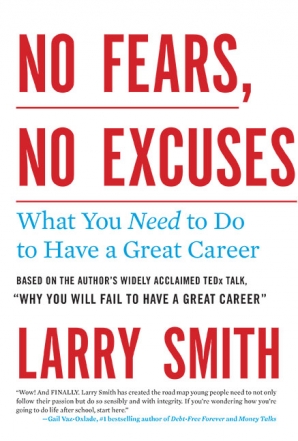
Book: No Fears, No Excuses: What You Need to Do to Have a Great Career by Larry Smith

Professor Larry Smith is well known on the University of Waterloo campus for his energy, knowledge, and humour in his Economics lectures (of which I’ve been a lucky witness). In 2011, his TEDx talk on the many ways one could fail to have a great career garnered millions of views. As a topic of importance and broad appeal, Smith received numerous replies asking for the other half of the talk – “tell us how to pursue a great career”!

This book is Smith’s answer. His premise is that the marketplace has become even more competitive than during the previous generation. A university degree was a guarantee to a great job, but no more. One must provide uniquely value to the customer or employer to remain in demand in the market and have decent quality of life. This is my biggest takeaway from the book – it urged me to reflect on how I can provide more value in my current work.

In Smith’s mind,

A career is great when it offers satisfying work, impact on the world, a dependable and adequate income, and personal freedom.

Furthermore, he believes that to acquire such a great career, one must have passion for the work – it makes the going easier in tough times, and passion gives rise to creative problems solving as a differentiating edge, simply because one becomes quite literally, more “thoughtful” in those areas of intense interest:

A passion is more than an interest, although a passion may first appear as an interest. An interesting idea is easy to think about; when you have an idea that evokes passion, you cannot stop thinking about it. When you find a domain that engages passion, you want to understand it totally; you naturally see gaps that should be filled, errors that should be corrected, and innovations that cry out for creation. With passion, there is an inherent tendency to take action. None of those elements is necessarily present when you find something “interesting”. Passion invites an intensity of enduring focus.

Smith has had more than 30,000 career statements and conversations on the subject of great work, and this book draws from it. I found the examples were vivid, grounded, and illustrates his points well. In these stories, passion isn’t found through some quick moment of insight, but through lots of zig-zag and trial and error. It is not mere emotional excitement, and has components of conscious curiosity and commitment.

Even when a passion is found, it can take years for one to learn to nurture, conserve, and shape it to the demands of the market and to the values of the individual to become a great career. Passion can be an overloaded term, and Smith advocates against acting on a whim – quitting one’s day job and search for the elusive passion. Instead, one should search and research methodically about the area of interest. It is conscious and effortful hard work, but its results can be equally rewarding. The road to passion requires dispassionate analysis and discipline, Smith argues, and I heartily agree.

It is clear to me through this book and others that a life filled with work that one detests can hardly be satisfying. This book is a concrete guide for those having a drive and passion waiting to be discovered through very accessible tools – read trade journals and books to see broad trends, talk to industry insiders to further understand the needs of the market and one’s ability to create unique value, and set benchmarks for progress. Its analytical approach to great career provides great value, in my opinion. Other approaches I also value are Mike Rowe’s approach of doing practical work or Cal Newport’s exhortation on finding enjoyment through mastery or even Mark Zuckerberg’s talk about doing work (entrepreneurship in this case) with a sense of mission.

All the aforementioned ways, however, are in the pursuit of fulfilling work that provides value to family and society, and often requires courage – the courage to abandon the safety of conventional wisdom, to leave the comfort of social conformity, and accept the constant challenge of pathfinding. Perhaps that’s why great work is rewarding, because it is so arduous. Smith knows this intimately, as he also overcame painful shyness and endured much trial and error before finding his own great career that requires much public speaking as a teacher and industry consultant.

Courage is essential, Smith would say, but as to its origin and where one finds it? Smith perks ups and looks solemnly at his students – now that’s the mystery.

Saturday, 7 May 2016

Book: What Do You Want to Do Before You Die, by The Buried Life

Provoked, I picked up this book from the library shelf on which it stood. The title with the 4 guys in the picture suggested a wild journey, and it was.

They are 2 brothers, a neighbour, and a close friend; each had his own reason for uncomfortable questions in life. Jonnie endured his parents’ surprising divorce and became skeptical in what he held to be true. Dave, reeling from the wild life as a competitive break dancer, felt finally ready to change the joint-a-day and overweight life he had. Faced with adulthood and the tragic drowning of his close friend at the graduation camping trip, Duncan found no solace in his backpacking trips and wanted more. Ben, a competitive rugby player who was invited to play at national level, turned it down and went into depression and felt powerless in his future direction.

They wanted to feel a sense of control, the joy of truly helping others and to connect. So in 2006, they asked themselves – “what do I want to do before I die” – a bucket list was born. It had crazy ideas like “singing the national anthem to a packed stadium”, “opening the 6 o’clock news”, and “be dumped by a stripper for being too slutty”. They found a mossy, ‘77 Dodge Coachman, named it Bedadu, and crossed the country realizing these dreams. To add some purpose, they made it a goal to help someone else realize their bucket list item for every one they cross from their list.

As they gone on, words spread about their journey and they gathered a small following, some suggested newer items to the list (a WWII vet urging them to teach youngsters not to forget the terror of war), some to offer help in any way, others wanted to join in for the ride. This book is a collection of some of the items they’ve managed to cross off from their own list or for others. The items grew more ambitious – they swindled security and crashed an MTV party and played basketball with president Obama. But it’s the more somber moments that remained memorable for me – their visiting the Folsom prison, helping a man raise money to organize a ranch for kids in need. These were cherish reminders for me that what some others yearn to have – a shelter, nurturing from parents, relative health, I only deign to dispense. It puts many things in perspective.

They’ve since gone on to give speeches and interviews at various events, urging others to consider what really matters to them in the face of mortality, and how might one matter to others. The fame also culminated a feature show with MTV. So far, they’ve managed to keep themselves poor while being famous, in the hopes that it’d keep them grounded, not be slave to the advertising deals that might distract from their goal of finding that which is meaningful and ambitious.

The older adult in me wonder what they’d do after this. Would anything less exciting become too mundane for them, even if it’s useful for society? I certainly hope not. But for what it’s worth, their journey provides a thought experiment, a deeper inquiry into whether one’s living “the buried life”. And that’s a valuable lesson.

Thursday, 10 March 2016

Book: The Outside Circle by Patti Laboucane-Benson. Art by Kelly Mellings

This is a Graphic Novel around the protagonist, Pete, an Aboriginal young adult who is involved in a violent gang dealing drugs and whose mother is a heroine addict. One night, out of self defense he killed his mom’s boyfriend, landing him in jail. The guardianship of his brother, Joey, would be forcibly transferred to the government of Alberta. Pete never knew his father and would not see in mother again until she passed away.

While serving his sentence, Pete became involved in gang violence in jail, but also joined a rehabilitation program that combined counseling and traditional Aborigional ceremonial practices for healing. Pete came to terms with his past and in the end, found his calling as a protector for his family and became a counselor for others who have the same challenges as he once did.

This is a heavy and tragic story of loss, but also of rebirth. I was in a dark mood while reading it, but it felt a necessary aspect of the Canadian culture to be aware of. While I had learned of the maltreatment of Aboriginals from some Canadian history textbooks, having it depicted in visual form was all the more immersive. The cycle of violence and poverty was vivid – of kids removed from parents, of the fights in gangs, the anguish of a minority whose cultural values are vastly divergent from the majority.

While the main character is fictional, it is drawn up from the author’s 20 years of work and research on healing of gang-affiliated or incarcerated Aboriginal men. The book also contained some appalling statistics: 57% of First Nations children in Canadian cities live in low-income families, and 68% of children in the Albertan child welfare system are Aboriginals. I’ve been ignorant of these facts until now. Fostering an amicable relationship with Aboriginals was pressing during John A. Macdonald’s time as Prime Minister. The outcome wouldn’t be satisfactory then, and I wonder if Macdonald would approve of the progress made thus far. Perhaps he wouldn’t.

This book is, in my opinion, beautifully illustrated and tells a compelling and important story. It had brought me better understanding to the tribulations of the Aboriginal Canadians and I recommend it, especially to fellow Canadians.

Sunday, 24 January 2016

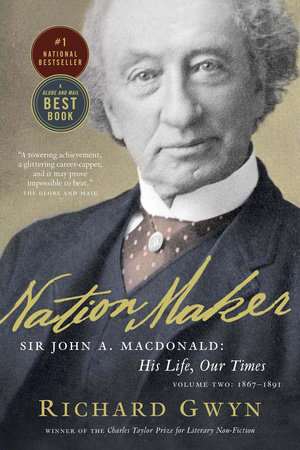
Book: Nation Maker: Sir John A. Macdonald: His Life, Our Times by Richard Gwyn

This is the second of two volumes of the biography on the life of Sir John A. Macdonald by Gwyn. I had read the first volume back in 2014.
This volume starts just after the confederation, and encompasses the building of the national railway, the establishment of the Royal Canadian Mounted Police that had taken a more cooperative approach with the natives and became one of Canada’s well known symbols, and the unfortunate incidents and handling of the the uprising of Louis Riel and the natives which still have consequences today.

A previous biography of Macdonald, George Parkin, summarized Macdonald thusly:

He believed that there was room on the continent of America for at least two nations, and he was determined that Canada should be a nation. He believed in the superiority of the British constitution to any other for free men, and that the preservation of the union with the mother country was necessary to the making of Canada. He had faith in the French race, and believed that a good understanding between French and English people was essential to the national welfare.

“Had there been no Macdonald, there almost certainly would be today no Canada”, Gwyn argues. The nation came into being after much hardwork and was by no means a given. Many issues, including foreign relations with many nations and domestic policy with the natives, remain to be solved. I look forward to the next chapter in Canada’s making.

Saturday, 2 January 2016

Book: The Eleventh day - the Full Story of 9/11. By Anthony Summers and Robbyn Swan

On the morning of Sept. 11, 2001, two planes loaded with fuel for their intercontinental journeys crashed into the two towers of the World Trade Center within a mere 17 minutes. With the blaze that ensued, one more plane is to hit the pentagon, another would crash to the ground thanks to the brave defiance of its passengers.

The entire terrorist attack on this day, including the collapsing of the two towers, would unfold within 2 hours and at its wake, 2,982 lives would be lost. Nearby hospitals were fully mobilized with doctors who had worked continuous shifts on standby ready for the tidal wave of patients, only to realize that most victims had perished during the attack; many with body parts severed and unidentified. Some body parts would be still discovered in 2009. This was the largest rescue mission for New York City to date.

Economic activity ground to a halt. The New York Stock Exchange would close for the rest of the week. The Federal Reserve Bank in New York would evacuate, but no one knew how to lock up the bank as it had never been unmanned before. Within 24 hours of the attack, King Abdullah from Saudi Arabia sent 9 million barrels of oil to America to stave off an economic crisis in the States. A year later, the damage to NYC is estimated to be between $83 to $95 billion.

Ever since, the shockwave of the attack rippled through America and beyond. My own motivation to read this book was to understand this event better, but more questions seem to be raised than answered, all of which have no simple answers:
While the deaths on the day of 9/11 is known, many rescuers have since died slowly and painfully after the incident due to respiratory problems.  Their stories aren’t often told. During the Iraqi war, a war instigated on false premise, it’s estimated that 100,000 civilians died during and following the invasion. Could they find justice?  What of the lacking of details on intelligence work prior to the attack and the accompanying accountability?  What of the transparency in various country’s involvement in the attack? The cost of the attack was estimated at around half a million and 10 years on, the war had costed 1.15 trillion.  Could this be a sustainable response to future attacks?  How could different peoples resolve such differences and seek understanding?
I have learned a tremendous amount through this book.  It is a detailed and articulate account of the 9/11 attack – its historical background, the urgent question of Israel and Palestine, the stories of the perpetrators, the intelligence and military response from America and other countries, and of the pillars of the conspiracy theorists and how it does not stand up to the evidence at hand.

Since then, the attack has permeated every form of artistic expressions – in languages, in films, and even in clothes. While the original leader of the attack, Osama bin Laden, had been killed, the conflict between various peoples persists. I fervently hope in the near future this contention can see a peaceful resolution.

Wednesday, 23 December 2015

Book: Losing the Signal by Jacquie McNish and Sean Silcoff

This is the story of BlackBerry's dramatic rise and fall. The company pioneered the smartphone product category and in 2009 became its biggest maker with roughly 20 billions in revenue.  Its phones started as a tools for business executives, then was seen carried by celebrities, politicians (Obama refused to give it up after having been elected President), and regular consumers seemed to embrace it, too.

As the story goes, a few years later, Apple and Samsung entered the market and took the lead from BlackBerry (formerly RIM).  Today, BlackBerry sales constitutes less than 1 percent of global smartphone market.

It was hard to imagine, but before Apple and Samsung, BlackBerry was the Apple and Samsung to vendors like Nokia and Motorola – conceived as innovative, reliable, and user friendly. Their phones brought consumers into the smartphone market.  While expanding at a furious pace, the company went through intellectual property fights that distracted its leaders, who over the years started to grow apart in the overall direction.  Apple then championed the conception of a smartphone being the most personal computer for the masses, a strategy that was profoundly different from BlackBerry's catering to a business professionals user base.  Steve Sinofsky wrote on the importance of re-evaluating underlying assumptions about its product when such new entrants emerge.  These were the major accents of the book.  Here’s an excerpt of the book.

Overall, the story was enlightening.  I'm sad as a Canadian who went to the university overlooking BlackBerry’s campus. However, the rise of BlackBerry was and has been a big boon to fostering the tech talent in the Kitchener-Waterloo region.  Their lessons and experiences are carried with its employees as they join other companies.  The two co-founders, Mike and Jim, continue to be active as mentors and investors in the KW area and in Canada at large, helping to build and enrich institutions such as the Perimeter Institute, the Quantum-Nano Centre at University of Waterloo, and the Centre for International Govenance Innovation.  While a chapter of the BlackBerry story has closed, I look forward to the next fruits of such sown seeds in Canada’s technology sector.
Sunday, 9 August 2015

Book Thoughts - Johann Sebastian Bach: The Learned Musician by Christoph Wolff

(Pulitzer Prize Finalist)

For most, the name “Bach” probably conjures up this most famous portrait of him – seeming serious, formidable, maybe a bit like a bureaucrat, and ripe with seniority evidenced by the double chin:

This was the time before the invention of photography, and the portraits’ subjects would choose how they’d like to be seen by the viewer, which often amounted to their job functions or what they did.  Bach is shown as a composer here holding a piece of music.  The title says it’s a 6 voice perpetual canon, so it requires 6 simultaneous melodic lines.  But there are only 3 here – where are the others?

After years of puzzling over the riddle, it’s discovered that by reading the 3 lines from our perspective as one is doing normally, combined with the same 3 lines read from Bach’s perspective (ie. backwards and with different clefs), a 6 voice canon would thus emerge as titled.  Bach, though principled and disciplined, seems to have a playful and maybe slightly mischievous side, too.

As in this portrait, it is the many sides of Bach that I find fascinating.  As one of the best organist of his time playing the hymn at church, he would add many embellishments of his own that confused the congregation who were trying to sing a simple tune.  Then as it is now, his music is very demanding for the musicians, and at a rehearsal for a difficult piece he scolded a bassoon player for messing up the part, leading to a brief sword fight between the teacher/student pair.  Intending to leave his employer he forced the issue of resignation to an extent that earned him one month of jail time, making him one of the very few western musicians in history to have been imprisoned.  While having written music that can seem heavy and overly structured, the man who gave birth to them could be feisty, demanding, and not willing to conform to every rule.

Beyond this seemingly cavalier personality, however, Bach’s skill as a composer was honed through incredible hard work.  He was very much self taught and often studied and copied works of many other composers.  He also composed at a furious pace - at one point writing 20 to 30 minutes of music for choir and orchestra, then perform it during the Sunday service every week, not to mention he has to teach at school, conduct for other city and church functions, host out of town musicians, and raising 20 children (only 7 survived to adulthood).  It’s no surprise that he left very little letters and personal journals.  There simply was no time.

What most fascinated me about Bach though, is that while I’ve known him mostly as a composer, it may be more apt to describe Bach as a musical scientist, interested in all aspect of music.  As a music virtuoso he played the violin and was one of the best organ players known for his musicality, technique, and improvisation.  His technical understanding in musical instruments and player ergonomics, especially the organ, allowed him input to the design and construction of organs, violins, and the fortepiano that would later become the modern day piano.  As a scientist and scholar, he composed pieces that systematically navigated all major and minor keys showing the harmonic possibilities afforded by the new tuning system on the keyboard so that instead of staying within the keys of 3 sharps and 3 flats, one can navigate through the entire set of 24 keys.  As a teacher, he wrote pedagogical pieces for multiple and progressive levels of musical expertise on keyboard and string instruments that are still played today, training player’s evenness of the left and right hand on the piano, for instance.  He was a conductor for choral as well as orchestral groups and driven by his curiosity and gregariousness, was eager to receive many visiting musicians to the city.  Being entrepreneurial, he bought and rented out instruments for a fee, and sold compositions for himself and other musicians.  In all, Bach was involved in all aspects of music making – the intellectual process of composition, the act of teaching, conducting, performing (individually and collectively), the engineering aspect of instrument design, maintenance, and the politics and commercial procurement of music.  He had an obsessive curiosity in the nature and science of music that permeated his art and path of inquiry.

Of all the roles Bach held, he chose to portray himself as a composer first and foremost, probably viewing the written music as his greatest achievement.  Yet, at the time of his death at the age of 65 in 1750, Bach was most remembered as an outstanding organist and improviser.  His music was considered by the public as too old fashioned, too ornate and dense, belonging to the bygone provincial style of the Baroque period, while the music world had shifted its gaze to the simpler, cleaner international style of the Classical period, with Vienna at its centre and to be represented by masters such as Beethoven, Mozart, and Haydn.  Bach’s music would only remain known to his students and a small group of international connoisseurs.  It was only when Mendelssohn performed an abridged version of his St. Matthew Passion nearly a century after Bach’s death that the general world had revived the interest in the works of this great master.  His music integrated the previously independent principles of “thorough bass, harmony, and counterpoint”.  As he was inspired by the Newtonian era’s sense of inquiry for truth, Bach’s exploration in the musical science would set new frameworks for western music and his contribution would be compared to this great scientist.  His composition had a great influence on the works of Beethoven, Mozart, Brahms, and Max Reger, and is still much admired and performed for their technical demand, pedagogical value, and artistic beauty the world over, including popular works like Jesu, Joy of Man’s Desiring and the Prelude from the Cello Suite No. 1.

There’s a small story on Mozart’s early encounter with Bach’s works.  40 years after Bach’s passing, his former position as conductor at the St. Thomas School is now held by his student Johann Friedrich Doles. One day, Doles invited Mozart of Vienna to visit the school, and

the choir surprised Mozart with the performance of the double chorus motet Singet dem Herrn ein neues Lied by Sebastian Bach. Mozart knew this master more by hearsay than by his works, which had become quite rare; at least his motets, which had never been printed, were completely unknown to him.  Hardly had the choir sung a few measures when Mozart sat up, startled; a few measures more and he called out “What is this?” And now his whole soul seemed to be in his ears.  When the singing was finished he cried out, full of joy: “Now there is something one can learn from!”

The learned musician as given the world something to learn from.


================================================

ps. I’m not a Bach expert and don’t have formal music training, and am simply an admirer of his music.  I hope this post still provides some value in understanding the composer.

Other Sources:

From the Repertoire: Western Music History through Performance, from Curtis Institute of Music, offered by Coursera

Listening to Music, Lecture 13 and 16, from Yale University

Great Composers – Bach, from BBC

Bach: a Passionate Life, by John Eliot Gardiner, from BBC

Rilling Lectures: St. Matthew Passion

Peter Sellars and Simon Halsey on the St. Matthew Passion performed by the Berlin Philharmonic

John Eliot Gardiner: In Rehearsal (of Cantata 63)

Interviews from All of Bach

An Art of the Fugue, played by Glenn Gould

Bach Performance on the Piano, by Angela Hewitt

Sunday, 2 August 2015

Documentary Films – Summer 2015

Japan: Memoirs of a Secret Empire (PBS – 3 part documentary)
The cultural story of Japan from the 16th century onward.


Pressure Cooker (Available on Hoopla)
A tough teacher, Wilma Stephenson, works in a poor neighbourhood high school to train students in the culinary arts to earn scholarships for college.


Citizenfour (Oscar Winner for Best Documentary Feature, 2015)
The story of Edward Snowden and his revelation of the NSA files – filmed as it occurred.


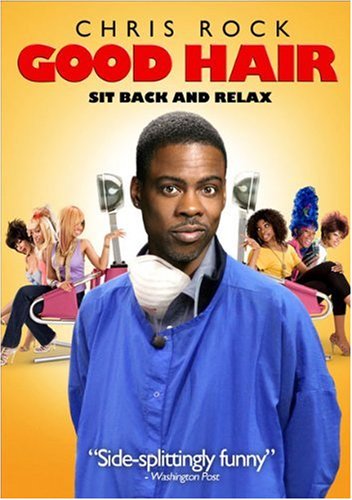
Good Hair
Comedian Chris Rock explores the commercial, cultural, and personal dimensions in the hair upkeep of the African American community and what it reflects of our society.


The Kingdom of Dreams and Madness
Showing the workings of the famed Studio Ghibli, with focus on its formidable founder Hayao Miyazaki.  I particularly enjoyed the special features showing a visit by John Lasseter and the view of the studio from the “resident cat’s” point of view.


The Gatekeepers (Oscar Nominee for Best Documentary, 2012)
Six former heads of the Shin Bet, Israel’s Secret Service, reflect on the successes and failures of the agency’s past actions, then wishing to veer away from the previous hardline approach to a more conciliatory one based on the two-state solution.


Red Obsession
The story of the newly rich in China driving up the demand for ultra premium red wine and its subsequent price collapse in the years following.


Cirque du Soleil - Flow: A Tribute to the Artists of "O" (Available on Hoopla)
Thoughts and lives of the artists and athletes from the “O” show in Las Vegas performed by Cirque du Soleil.


Vanishing of the Bees
Around the world incidents of sudden, dramatic, and mysterious honeybee colony collapse are occurring with no definitive cause.  The film documents the role of bees in agriculture, the perspectives of the bee keepers and possible next steps.


The Gruen Effect: Victor Gruen and the Shopping Mall
Victor Gruen, the man often thought of as the Father of the Shopping Mall, had created the malls to bring the feel of European city centres to the burgeoning suburbs to America.  Seeing his creation morphing into monuments focused on profit maximization, however, he spent the rest of his life dissociating from this concept so attached to him.


The Cove (Oscar Winner for Best Documentary Feature, 2010)
Filmed in secret, a group of activists uncovers the practice of dolphin fishing activity inside a cove in Japan, and argue that it’s cruel, unnecessary, and seek to bring to awareness that the meat sold to consumers is contaminated with mercury.


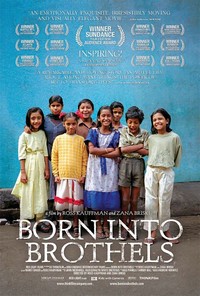
Born into Brothels (Oscar Winner, 2004)
Intending on filming the lives of prostitutes in Calcutta, India, the documentary photographer Zana Briski ended up making friends with 8 children born here and taught them photography, which depicted the poignant, toiling, and treacherous daily lives of those in the red light district from a child’s perspective.

Saturday, 1 August 2015

Some thoughts on Art

I am part of a discussion group in the KW area - KW Hungry Minds.  Topics of discussion ranges from gender issues, reconciliation, and the self – whatever suits our intellectual fancy.  Recently I had wanted to respond to an online comment about art, and long story short, was invited to write a blog post on it.

I want to thank Tess, the organizer, for encouraging me to do it and help edit out my grammar mistakes.  I’m self conscious about writing my own thoughts and sharing it in public, but hopefully some will find it useful or enjoyable.

Thursday, 30 April 2015

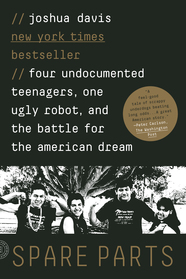
Books: Spare Parts by Joshua Davis

In 2004, 4 Mexican American high school students from an impoverished neighbourhood of West Phoenix, Arizona entered a college level national underwater robotics competition and won, beating elite institutions including MIT.

In a sense, it is a David vs. Goliath story, but perhaps more importantly, it’s a story of illegal immigrants - the status held by 3 of the 4 students.  Davis paints a life outside the restrictions of the law, but also excluded from its protection.  The anxiety of deportation is ever present, making even a school field trip a test of nerves for the students, parents, and teachers, wondering at the sight of any law enforcer if that would be the prelude to a deportation.

For illegal immigrants, physical and social mobility isn’t a right.  After the competition, while the members of rival teams secured promising professional engineering careers, the main characters joined the army (after deporting himself), went to college, became a line cook, and a janitor.

While the protection of incumbent citizens’ opportunities and privileges are necessary and often justifiable, Davis wonders if a mutually beneficial path could exist for the newcomers who have shown the ability and willingness to contribute to the new society where they’ve come to call home?

Friday, 13 March 2015

Fall and Winter 2014 Reading

There’s a lot here.  I might try to update more regularly in smaller increments to see how it works.

Books

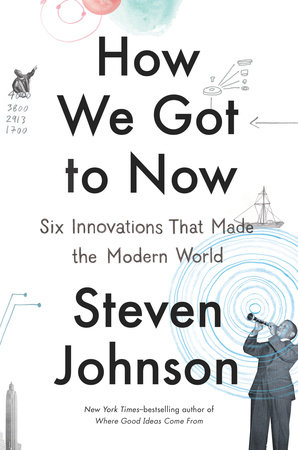
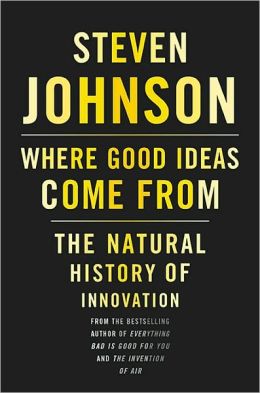
How was the modern world build?  Johnson shows that through the pervasive use of glass with its optical characteristics, understanding and building infrastructure to separate the clean from the dirty, the amplified ability to project and perceive sounds, the ubiquity of electric lighting, and the precise measurement and calculation of and with time, our modern world emerges from a world hardly imaginable not too long ago.

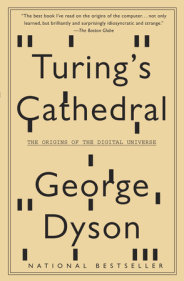
Computers, the ubiquitous thinking machines we now carry in our pockets and wear on wrists, had its first uses as calculators for modeling nuclear explosions, building the hydrogen bomb, and predict the weather.  Dyson show the quirky team of mathematicians and engineers, philosophers and physicists, led by John von Neumann and following Turing’s seminal thesis, that laid the foundation of the architecture in this digital universe still in use today.

Thanks to my friend Justin for the recommendation.
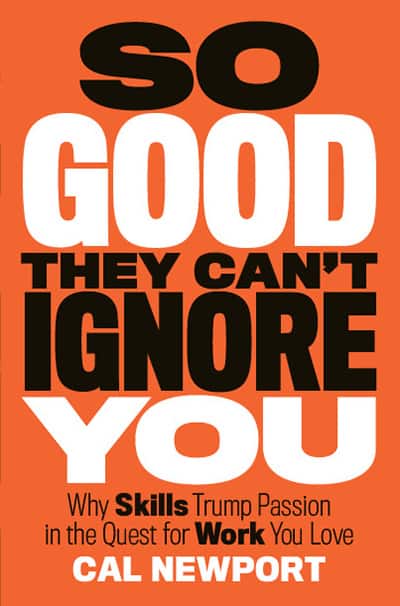
In this book, Newport argues that contrary to the belief that one should do where passion leads, it is a better alternative to build a rare and valuable skill, build up “career capital”, and in turn grow into position endowed with aspects that one can enjoy, such as autonomy and purpose.  I still believe that passion is important in one’s work, but I’m glad Newport has contributed another viewpoint in the diverse view on career path.

The Second Machine Age: Work, Progress, and Prosperity in a Time of Brilliant Technologies


Documentaries

Kinshasa Symphony

The Danish Solution: The Rescue of the Jews in Denmark

看見台灣 (Taiwan from Above)

Tiny: A story about Living Small

The Internet’s Own Boy:
The story of Aaron Swartz

No Impact Man

Shredded

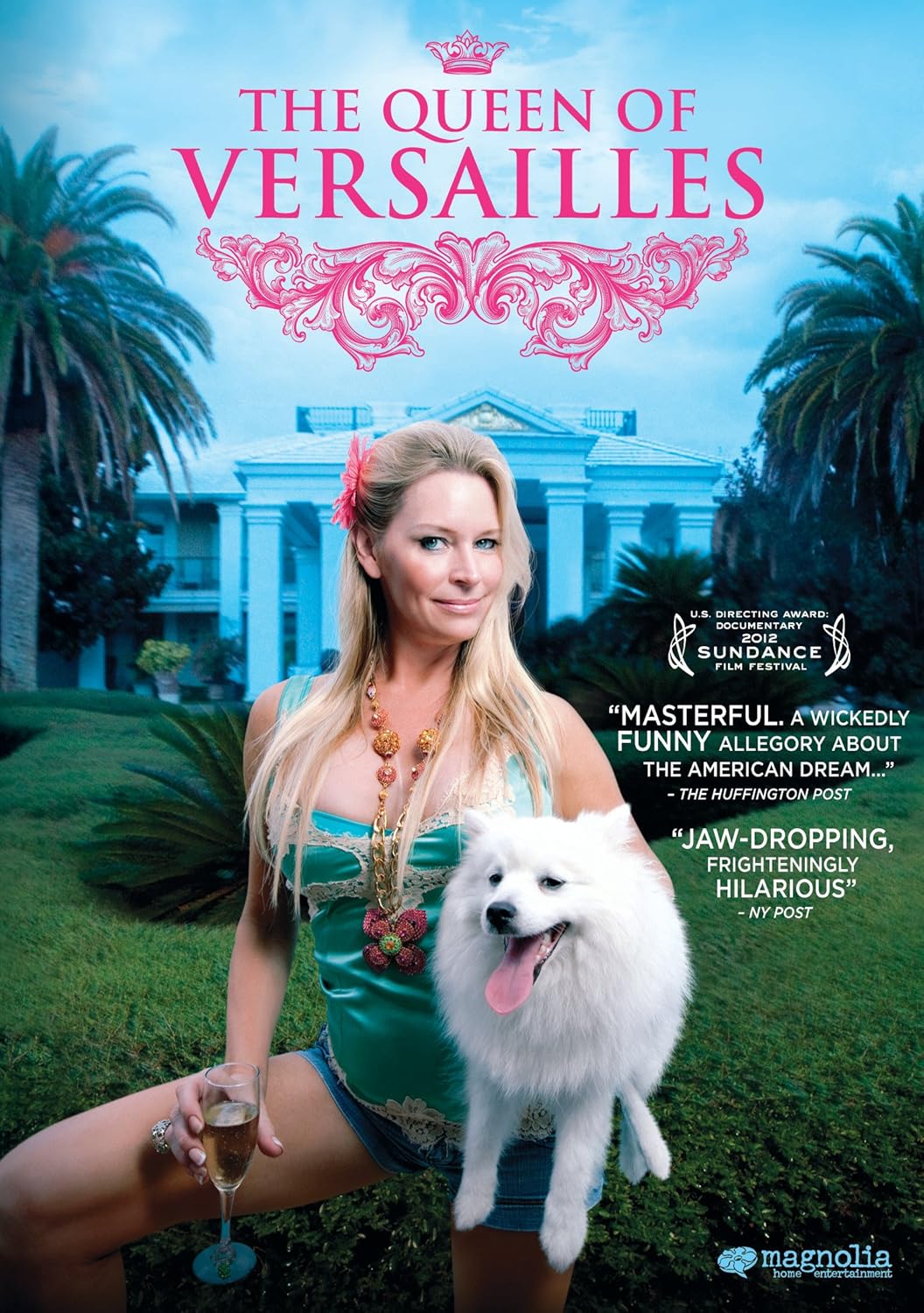
The Queen of Versailles

Interviews

Jack Ma, (馬雲),founder of Alibaba, Interviewed by Charlie Rose at Davos:

雷軍(Lei Jun, founder of Xiaomi)來台演講 (In Mandarin):

Podcasts

From Stanford Entrepreneurship Corner:

Sunday, 25 January 2015

Introduction to the Middle East

In the past, my interests in history have mainly focused on the “east” and the “west” – China and Japan versus the U.S., Britain, Germany, France, and occasionally Russia.  But what of the area in the middle, the parts that connect the two ends?  For centuries, the middle east enabled and fostered trade from both sides.  I wondered, what was their history and relationships as the neighbours changed or stayed the same.  Were the tense relations with the west in recent years always the case in history?  What are its origins?

Below are my first attempts in looking for some answers.  They are only an introduction, and by no means is my study on the subject complete at the end of this post.  In fact, it opens more questions – this merely educates me on the background of the land, and the terms often used in conjunction with these cultures.

I felt in learning about the middle east it’s imperative to understand its predominant religion – Islam, and the establishment of Israel in Palestine, for these colour the political rhetoric, the legal framework, and fuel the fundamentalist cause. The material below reflects this focus, and so far covers the history of Jews, Arabs, Persians, but not yet the Turks.  This is merely a starting point.

Through it all, I have been equally fascinated by the scene of devoted and joyous Jews holding up their Torah up high and by a Muslim’s submission in prayer in practicing their faith.  While the Jews contributed greatly to the development of finance in Europe, the contribution of Muslims in preserving ancient texts made Renaissance Europe possible.  These are important peoples in history.

I hope you’ll find something below interesting.

9/11

Documentary
Inside 9-11
(3 parts), by National Geographic

Book
The Eleventh Day: The Full Story of 9/11, by Anthony Summers and Robbyn Swan


Islam

Documentaries
Science and Islam
(3 parts) with Jim Al-Khalili, by BBC
Explores the history of Islam during its golden age from around 9th to 12th century and its contribution to math, medicine, astronomy, and more
Inside Islam (3 parts), by The History Channel
Prophet Muhammad (3 parts), by BBC

Movie
Wadjda
The first feature length film directed by a female Saudi director, this is the story of a free spirited 11 year old Saudi girl who joins the Quran recitation contest at school with the dream of using the prize money to buy a bike and race with her neighbour, in a land that frowns on girls riding bikes.  It portrays the daily life of  Muslim women, including their devotion to the faith.


Iran

Documentary
Iran and the West
(3 parts), by BBC
30 years after the Iranian Revolution in 1979, Iran’s relationship with the west is still uneasy.  This series describes the amicable relationship America had with Iran prior to the revolution, how the revolution changed this dynamic by the leader Ayatollah Khomeini, how his stern stance changed the power relations between the west and the middle east, and brings us to today.


Israel

Documentaries
The Story of the Jews (5 parts), with Simon Schama, by BBC
Israel and Palestine: a Divided Land (45 min), by Knowledge Unlimited – a concise introduction on the history of Israel
Defamation, directed by Yoav Shamir
Director Yoav Shamir, himself a Jew, wonders and explores in this film what anti-Semitism means in the world today.  He interviews ordinary Jews, the head of the Anti-Defamation League, and investigates anti-Semitic claims.  From it emerges a contrarian and entertaining view.

Book
Anti-Semitism: The Road to the Holocaust and Beyond, by Charles Patterson

Thursday, 4 December 2014

Video: How We Got to Now – Interview with Steven Johnson and Fred Wilson

This book and documentary series by Steven Johnson came out recently.  At the launch event, Johnson was interviewed together with Fred Wilson, a Venture Capitalist, to talk about technology history.

I quite enjoyed the video – Johnson did most of the talking, as he should, about the many fascinating story of technology.  For instance, the first North American sewage system set up was in Chicago, but the city was too flat for water to flow properly into the ocean.  So the engineers lifted the city up, neighbourhood after neighbourhood, using jackscrews, sometimes while the residents were still in the building.  This, together with his describing the experience of filming the series, gave an intimate view of the past and the present.

While Johnson brings the historical perspective, Fred Wilson looks into the future and gets paid to bet on some of his views.  At around 17:40 in the video, he talks about some of the big challenges of our time – transportation in crowded cities, new form of energy that is renewable, sustainable, and not carbon based, and how laying out communication networks through underground means is getting more expensive and making ideas like mesh networks quite enticing.

Here’s the video.  Hope you’ll enjoy it, too:

Saturday, 16 August 2014

Big History Extended Trailer | Narrated by Bryan Cranston | History Chan...

I recently watched this documentary series and thought it quite interesting.  Big history isn't really “history” in the traditional sense, but tries to see historical events in the context of science, somewhat similar to the way Jared Diamond uses Guns, Germs, and Steel to explain human developmental patterns.  The project was developed with the Big History Project supported by Bill Gate’s foundation.

There are 17 episodes in all, but most of them are short episodes.  Time may pass faster than you think.

Monday, 4 August 2014

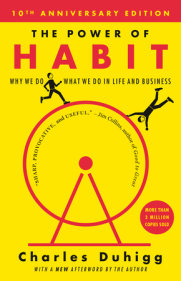
Book Thoughts: The Power of Habit by Charles Duhigg

Habit, it turns out, means more than just subconsciously grabbing a toothbrush using the same hand all the time.  During the time of WWI when brushing wasn’t a habit, professional salesmen had to go door to door selling toothpaste, often with so poor a result that toothpaste companies suffered financial loss and the government considered the state of oral health to be of national concern.  Leveraging tendencies in human habit and creating a craving through leaving a clean feeling in the mouth, however, Americans learned to brush, earning fortunes for the companies involved and left many with much better teeth.  Through this and many other examples, Duhigg shows habit’s impact in businesses, civic movements, and an individual’s well being.

Fundamental to the forming of habit is the “habit loop”, consisting of a trigger, a routine, and finally, a reward.  Once a routine has been performed many times with a reward following it, the brain identifies a trigger – a signal which is always associated with the ensuing routine, and engages the proper “autopilot” routine in the brain to perform the sequence of actions to get to the reward.  For a habitual smoker who lights a cigarette when feeling the need to relax, that feeling of tension is the cue triggering the routine of smoking.

Finally, the reward (a sense of relief in the smoker example) reinforce the habit loop, flagging it to our mind as being a worthwhile habit to keep, prodding the brain to seek ever more efficient ways to perform the routine, and gradually creating a craving, such that when a cue is given, one’s brain already anticipates and expects the reward.  If the reward is absent, however, feelings of disappointed and frustrated would arise – the stronger the habit, the stronger the emotions.

My favourite part of the book is in seeing the extraordinary similarities of human behaviours between individuals as manifested by the predictions of commercial software.  Retailers know a few things about its consumers.  First, buyers of a particular profile – say the same gender, age, wealth, and occupation – have fairly similar and persistent buying patterns.  Secondly, though many shoppers try to stay to their shopping list, most purchasing decisions are made during their time in store.  And thirdly, one is most susceptible to marketing influence such as placement, shelving, and display of products in the store when major life changes happen, such as a job change or family relocation.

All this adds up to one particular customer profile being exceptionally lucrative – couples with newborns.  Babies cost money – by their first birthday, the average spending on each is close to $7000.  That’s just a start.  Parents with a newborn are so deprived for time and energy that they will purchase everything in one location, during a time when such a life changing event renders them most malleable to advertising influence.  Soon, where they get diapers will get to sell them orange juice, movies, and many more items.  It is why retailers go to great lengths to court parents of newborns, even visiting maternity wards in hospitals.

But by the time a baby is born, the competition for that customer is too fierce.  Could it be possible to win the moms over before others got to them?  Target, a leading retailer, wondered if they could somehow find out who are the expecting mothers through their buying patterns.  Target’s group of mathematicians, scientists, and programmers experimented, and found they could – that 25 products, if purchased in a certain sequence and over a period of time, predicts quite accurately if the buyer is expecting a new baby.  Through the loyalty program data, Target would then send relevant marketing material to entice the customers ahead of competitors.  This program was so successful it contributed to Target’s profit rise from 44 to 65 billion between 2002 and 2009.

Besides the retailing world, Duhigg shows that software algorithms are now employed to predict the future success of songs in the music industry, and in casinos to forecast individual’s gambling behaviour, precise to the minutes and cents.  It reminded me of the talks that professor Larry Smith gave on expert systems.

Brain scans show that once a habit is formed it is etched in our neural pathways.  Trying to completely quash the desire to indulge in old habits through willpower alone is therefore often fruitless.  It’s why many who quit smoking “cold turkey” without other support can succumb to it all the more upon encountering major life stresses.

Bad habit may now seem like an insurmountable force that enslaves us, but Duhigg is more optimistic, and argues throughout the book that though persistent, habits are like muscles and can be weakened and also reframed.  Through patient self examination to find the triggers, and carefully cultivating new routines and experimenting with rewards that one responds to, habits can be changed.  Using again the smoker example, some have found the use of meditation as the routine (instead of lighting the cigarette) when the trigger of tension arises to be useful.  Others find this not at all, and try other methods.

Habit change then, can be a very drawn out process in self exploration that requires much motivation and an understanding that what seems like a string of failed attempts are actually experimentation toward betterment.  In addition, new habits can also be cultivated, and by weakening the old habit loops, can overtake the old habits.  It also bears mentioning that the power of habit works equally strong on the good habits too, and while bad habits may be devastating, good habits can be a significant force for good.

I’m not sure habit is destiny, but it is powerful – and the book showed a myriad of examples for its downside and upside.  In closing, Duhigg writes:

This is the real power of habit: the insight that your habits are what you choose them to be.  Once that choice occurs – and becomes automatic – it’s not only real, it starts to seem inevitable, the thing as [William] James wrote, that bears ‘us irresistibly toward our destiny, whatever the latter may be.’